Well, neither did I.
And that’s okay.
Because it never stopped me from doing professional work as an artist.
Gosh, my head is bursting with thoughts and ideas that it’s actually paralyzing so I’m gonna clear some cobwebs and all the clutter in my head by writing this out.
Or maybe… I’ll just bake bread?
Okay, fine! I’ll write.
I’ll write.
So I finished with a degree in BA Psychology and if I had to live my life all over again, I would still choose to spend my four years researching, experimenting and reading all things Psychology. The one thing I would change, however, is that I would take non-academic art classes outside of university and start the actual doing of art immediately, and not procrastinate for 7 years (12 years, if you include the creative block).
Throughout my life, inside and outside of school, I’ve always been regarded as an artist, probably even before I could write.
But to be a working artist?
That was never an option back in the day. In fact, it wasn’t even considered a profession professional enough. I was told that I would finish my degree and I was, in a way, pretty much expected to work in a “good” company where I would also retire.
Thinking about it, the idea just leaves a funny taste in my mouth.
However, I happily finished my Psychology degree, one which I enjoyed thoroughly and continue to be passionate about. But I’ve worn many hats since I finished school. Eight hats, if I’m not mistaken. I have worked full time in a high school, a modeling agency, an international bank, a boarding school, a PR agency and eventually juggled freelance art with part-time hours in a modeling school and even a culinary school. I also did food writing for some time which led me to start a food blog (hence, jarofsalt.com), and even had a radio stint for month as a news announcer. Heck, I even got certified to teach Stott pilates two years ago.
Yet in all those years, I never really stopped making art. Whether it was made for myself or commissioned by a client, art was always my natural groove.
To eventually do what I really wanted to do (a late start at 27) and do art professionally was met with labels, resistance, that I was rebelling and that I was lost.
On the contrary, committing to make art as a profession was when I truly found myself.
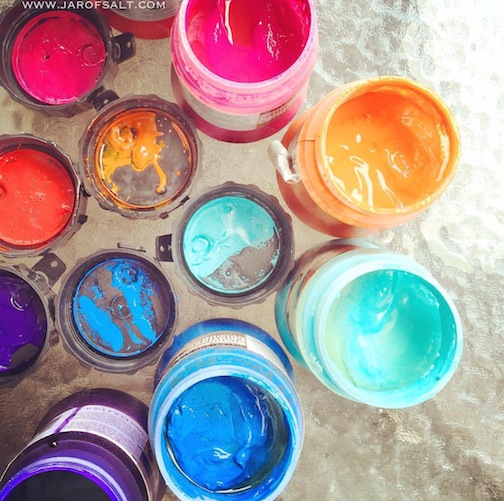
So, now what? You want to do art but there are probably a million and one reasons to not make art. But should the lack of art degree hold you back?
I think not.
In the era of the internet, there are so many ways to invent and reinvent yourself.
How does one become an artist in this day and age, then?
1. Be and Make.
It’s hard to be an artist if you’re not making anything at all. This makes sense, doesn’t it? Don’t pressure yourself, though. No one expects you to make the next Sotheby-worthy masterpiece tomorrow (but feel free to do so if you can!). Start with doodling on the margins of your books. Make circles on your notebook. Draw a flower. ANY flower. So really, the first step to calling yourself an artist is to be one.
And that starts with making.
2. Commune.
I’ve spoken of my creative block many times over but what was the first step to break the ice?
I joined WordPress in 2011 and started blogging. When I first joined WP five years ago, I lamented about the lack of art in my life. Then one post led to the next, one comment after another. And it got the ball rolling. I managed to produce my first sketch after five years. And things started rolling ever since.
There are also so many creativity, sketching, drawing and art groups on Facebook. I suggest you type in those words and see what shows up and resonates with you and your preferred medium. Discussions can be amazing, so much to learn, and sometimes all you need is a regular art challenge to get the juices flowing.
With social media, you can also follow artists who inspire you. Many of them are active in real time. Comment or write them an email. Many of them will happily respond, you’ll be surprised 🙂
3. Learn.
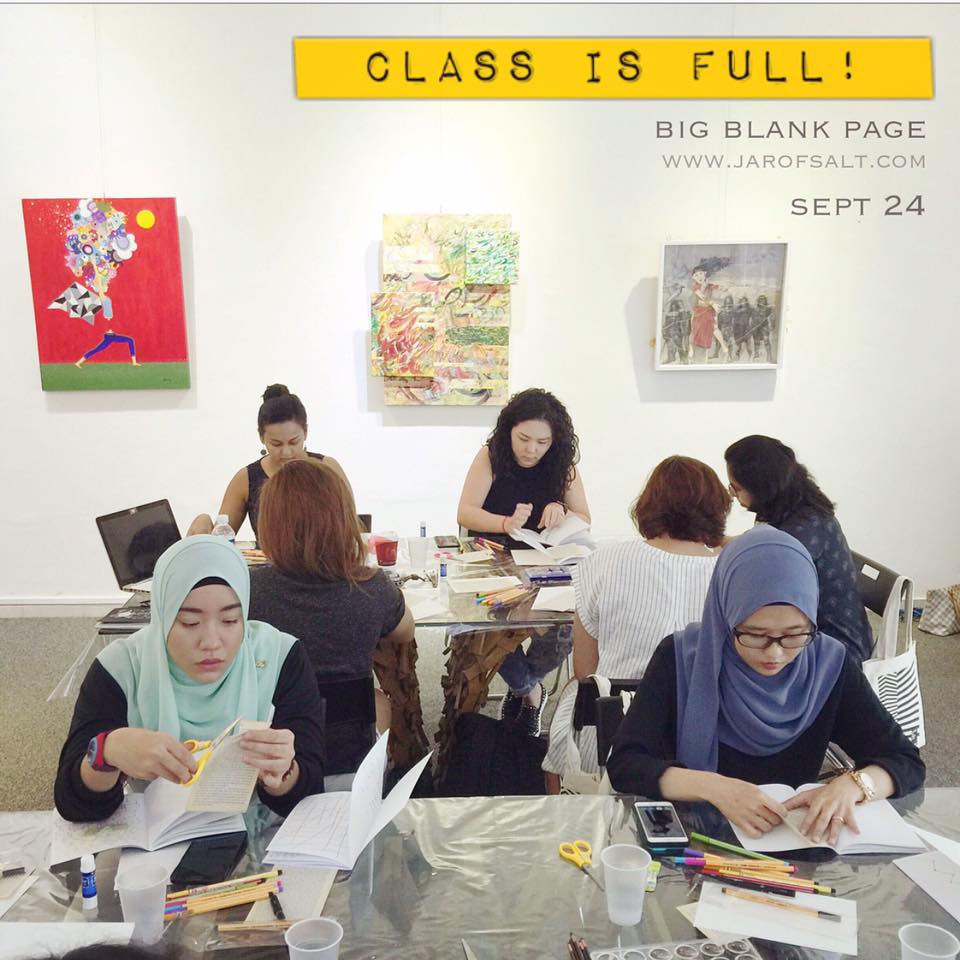
The very first art class I took was for pottery, in 2006. And one of the things I did to break the ice after my creative block later on was to take another live class as well. This time it was for printmaking. Unfortunately, I didn’t feel motivated or challenged enough in class 🙁 So I hope to revisit this someday as I still have a lot of printing ink in my work room 😮
I also tried my hand (literally) in calligraphy . It’s a skill I thought I can never learn (or even enjoy!) because of my messy penmanship. But with proper instruction and like-minded people, it can be done. My calligraphy obsession was short-lived but it lead me to Instagram to share my work.
And my social media life has never been the same ever since 🙂
Also, thanks to the internet you can learn all sorts of creative things from the comforts of your own home. Check out online art classes from Creative Bug, Skillshare and even Lynda if you’re doing digital. Also, find other artists to follow because many of them give online instruction.
There are a lot of free classes out there so maximize them, especially on YouTube. However, I highly recommend saving and spending on some of the paid classes because quality education is truly worth having, no matter how small.
4. Read. A lot.
I haven’t read fiction and novels in years but I constantly buy art and design books. And magazines! Even though some of them are more expensive than a book. And that’s because fine quality art and design magazines are produced with the content direction of a book. Frankly, I don’t like reading highly visual material through a screen because I’m a tactile reader and I like making notes and marks as I use them for reference as I work. Look for inspiring publications like Flow, Uppercase, Frankie and Anorak.
I remember a successful artist who told me to invest in art books. The more, the better. I whined, “It’s so expensive!”.
His reply was simple, “Why, how much do you think would you have spent if you went to art school?”
That moment changed my perspective forever.
5. Promote yourself.
Before online everything and social media, I found art circles to be very cliquish. I still do, to be honest. When I started in 2002, everyone was at the mercy of print editors to get your name and work out there. It was so hard to reach out to editors and it usually helped to have someone refer you first. Yes, I’ve done cold calls to media heads back in the day and they proved to be very fruitful. It was only when my art started to circulate among publications that my career kicked off. Eventually, editors and producers were the ones requesting to work together.
Nowadays, it’s so different. If you post your work on Facebook or Pinterest, friends can easily share your work. Before you know it, one thing leads to another and then you blink: your art is already out there. Know this however: promoting myself makes me feel icky. But it has to be done and you will find a voice that you will eventually be comfortable with without being in-your-face salespitchy. 🙂
Not all platforms work for everyone, though. Some find their voice in Twitter, others on Pinterest. Many on Facebook. In my case, Instagram is the one that catapulted my work and helped instil a structure in the way I do things creatively. If you’re trying to build a system to strengthen your social media presence, check out this course by Melissa Camillieri. I highly recommend it, seriously.
Sit on this and think about what you want to do with your art, whether you want to be paid for your services or simply want to do it for your own pleasure. Heck, you don’t even have to share it if you don’t want to.
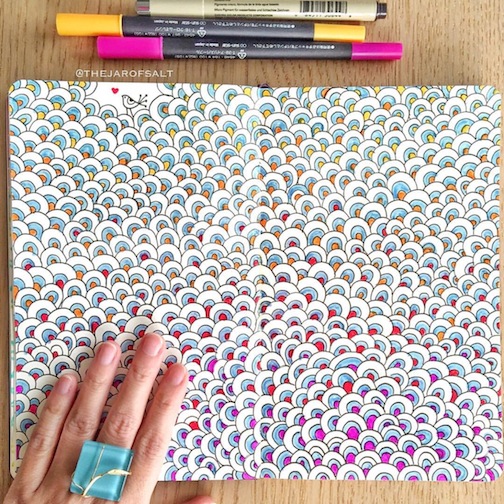
But whatever you do, start small. Be it a nicely-written grocery list, drawing random stick people on the corner of the newspaper, adding color to a homemade cookie, a hand-written postcard for a friend, a practice stitch on a sample cloth, or even just splattering paint on a piece of paper for no reason at all.
What matters most, I believe, is to just make.
Recent Comments