Tag

Humor

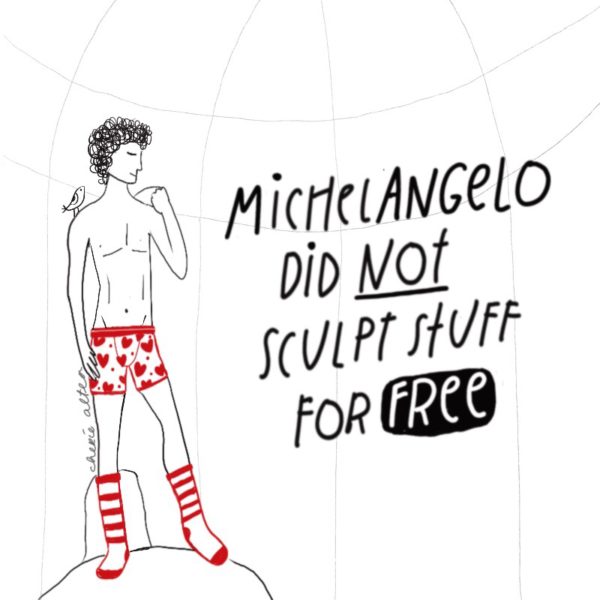
Michelangelo Did Not Starve For his Art

By Uncategorized No Comments

That’s why he was, at that time, worth what would be $47 MILLION today?

Just read that eye-popping tale in a book by Jeff Goins recently, a revelation discovered by Professor Hatfield in 1995 when he stumbled upon the artist’s bank records while researching something else.

Suddenly, the way I always envisioned him was wrong! It’s a nice, happy thought that kinda puts things in perspective, doesn’t it? ??

THINK ABOUT THAT! Let’s start the week with that empowering thought, why don’t we?

Have a fruitful and easy week up ahead!

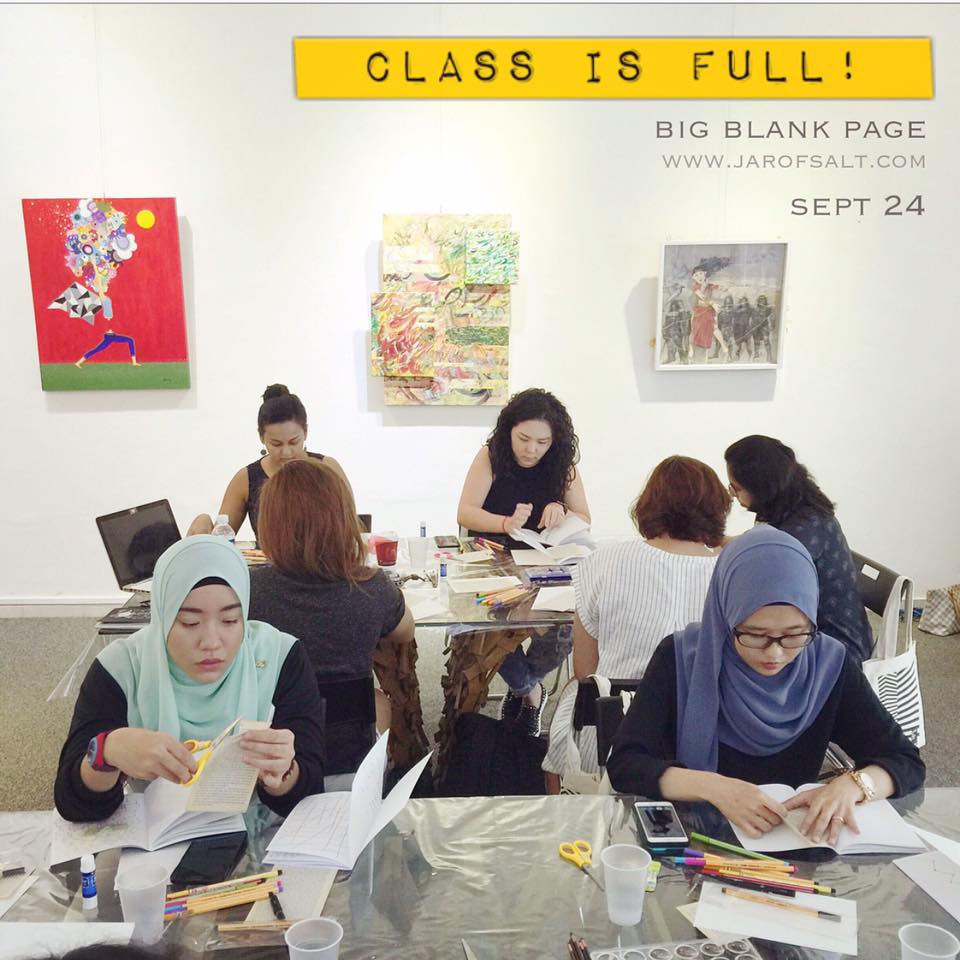
Why I Created The ‘Big Blank Page’

By Uncategorized No Comments


Why The ‘Big Blank Page’ is not for kids.

Kids, by default, get so much support for creativity.  Whether it’s in school, weekend or community activities or even art lessons on TV programs,  kids have a slew of options to explore,  get happy and experiment with all things artful and creative.

Adults, however, have fewer choices that offer the same spirit.  Which is why I think grown-ups need me more than kids. For now.

The class is also a forum where we discuss the ghosts of our creative past: from teachers who may have made careless comments about our work, to a family who does not believe in art, topics that young kids may not have experienced or  be fully aware of, and can prevent them from participating in the discussion.

sketchbook-class-copy

Grown-ups need a break from adulting.

Many of the classes for adults I see are either structured lessons or art “jams” with hobbyists and/or professional artists — both of which can be intimidating for those who feel too shy about their own work.

Sometimes, adults want to make art without the pressure of perfection, judgment, or being instructed to draw “the right way”.

Sometimes, we just want to make a lot of nothing, enjoy the freedom of the beautiful mess,  and draw for its own sake.

Because every line, shape and color is valid.

You will draw.

I will not argue with you if your convictions dictate that you cannot draw.

But I am of unwavering belief and faith that everyone can draw. And I mean EVERYONE.

It’s just a matter of to what degree you can draw.

It’s crucial to remember  two things: 1. that what is considered beautiful is highly subjective, and 2. there is so much beauty in imperfection.

There’s more to art than being a Michelangelo or a Rembrandt. There’s also Rothko, Pollock and Matisse.  And if you can draw like you, then I believe that’s the best kind of artist to be.

Regardless of what you say or do, hemming and hawing, you will and can draw something.

If the shoe fits.

Some people like to draw flowers, others like swirly things, some like smiley faces, others like to make dots.  The ‘Big Blank Page’ acts as a springboard for your own exploration as you discover the smoothest groove for your artistic movement, what feels most natural and empowering for you to do artfully.

The creative journey is not meant to be travelled alone.

This is perhaps the paramount reason why I created the ‘Big Blank Page’.  I got tired of creating art by myself. Then I thought to myself, “Maybe there are others out there who are just like me, looking for a safe and supportive circle where we can make art freely.”

Making art, I learned, is all about community.  And this creative spirit is the very sanctuary on which the ‘Big Blank Page’ is built.


How Does One Become A Professional Artist?

By Uncategorized 4 Comments

People have asked me this: “How does one become a professional artist?”

Now that I look back, I realise that being a professional and working artist, with emphasis on “professional”,  goes beyond talent, imagination and skill.

sketchbook class

“My word is my bond.”

I picked up this principle when I worked in a bank. It is a phrase used by stock brokers on the trading floor, wherein agreements and financial transactions are made and delivered without signing any documents.  This is a value that was deeply ingrained in me ever since, and one that, I believe, makes me a valuable artist to work with.  As a working artist, it is important to be regarded as someone reliable and trustworthy, whether it comes to being punctual at meetings, responding to email messages quickly, following through on a commitment, and completing a project on or before the agreed date.

Language is of the essence.

When writing professional correspondence with clients, be mindful of your tone, choice of words and grammar. Emojis, smiley faces and LOLs are reserved for chat messages with friends.  I would also recommend to keep cute language and emojis at a minimum when responding on social media because nowadays, our chosen platform serves as a window to our work. This applies especially to the name or handle we assign to our social media accounts. So please think carefully and choose a name that can easily be spelled and remembered, and one that you feel reflects your brand best.  Finally, for as long as the purpose of the written transaction is about work, keep the language polished.  It will remind clients that they are working with someone who takes their work seriously.

Let your “office” reflect who you are.

Let’s face it. Not many of us will have workspace that clients will be able to visit.  With the internet, however, we are able to set up a virtual office, a room of our own, where people all over the world can visit at any time of the day.  Whatever platform we choose,  whether it’s Tumblr, Instagram or Facebook pages, it would be best to be mindful of the quality of our photos and the visual content that we post.  Keep the selfies, duckface and OOTDs to a bare minimum if it’s not relevant to what you do. Save the passive-aggressive quotes for your personal FB account.

Putting our best foot forward works to anyone’s advantage, which means going the extra mile with good composition, cleaning, adjusting the tilt or brightening of our pictures.

Uphold industry standards when stating your fees.

As a working artist, you get paid. And frankly, discussing money is perhaps my least favorite part about transacting art.  Good news though: it gets easier over time, I promise.  You eventually gain confidence in the discussing money as you learn to pick up financial language that is neither demanding or imposing.

But the most important thing for artists is to never undervalue yourself.  Please. To begin with, stop working for free.  Unless it’s a charity, an NGO or a cause that is close to your heart, you must get paid that is commensurate to your efforts.  Back in the day, we were at the mercy of industry movers for exposure in getting our name out there — simply because there wasn’t any social media available for us to do the work ourselves.

The promise of exposure as payment  does not work anymore in this era. Unless it’s some really high-profile client of massive proportions, or one that you think will be a fruitful springboard for your goals, exposure simply does not pay.

Be humble and grateful.

This is one practice I’ve done for as long as I can remember.  After meeting a potential client in person or over the phone, or when a project has been concluded, always send a message of thanks. This goes such a long way.

Thank them for their time and their effort to come meet with you.  Thank them for their ideas. Thank them for the experience.  To this day, I still thank the key people who gave me a break when I was just starting in 2004.  It makes such a huge difference simply saying ‘thank you’ for the opportunity to work together and for their support, big and small.

The world is small and things have a way of finding its way back to you. When you plant the seeds of kindness and exercise sincerity and goodwill, people will sense it and will be more than happy to pass your name to someone else.

Of course people will remember you for your talent, but being remembered for your character is simply priceless.

5 Thoughts On “Art Inc.” And Why You Should Read It

By Uncategorized 3 Comments

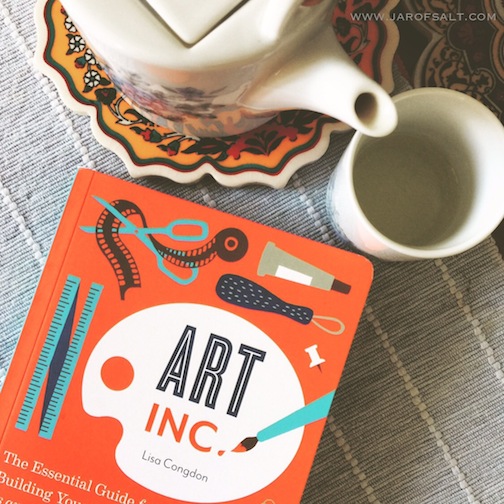
It took me a while to finish reading “Art, Inc.” by Lisa Congdon.  I bought this when it was released but put it down as I got distracted with other things.  Last week, I finally picked it up again and devoured its last pages by this morning.

art inc by lisa congdon

It’s for the working artist.

Simply put, all the ideas, options and possibilities for all forms of art are spelled out for any artist who wants to make a living off their work.  From licensing, illustrating children’s books to fine art selling, it’s all up to the artist to test them out and see what works best with your art.

It’s concise and comprehensive.

The flow of content is very easy to follow. The tone is friendly and language of writing is pretty straightforward. It makes it easy to digest all the information one page after the other. The book is rich with the author’s personal experiences and thoughts as a flourishing artist, so it makes the written ideas very, very real for the reader.

The testimonials are a source of encouragement.

The book features 20 interviews with artists of different fields.  I absolutely love hearing and reading about other people’s lives and how they carved their creative path, what worked and what didn’t.

The layout.

The aesthetics of the book affect my way of reading.  The main reason I put the book down was my vision had a hard time adjusting through the lengthy content on portions of red-orange pages and orange-on-white pages. I managed avoiding the strain by reading only in natural daylight, and not under a lamp. It changed everything and I sped through the book effortlessly thereafter.

The list of resources.

Lisa Congdon makes building a career out of art a concrete experience ,  as she  thoroughly  lists down specific resources: from conferences, galleries, printers, residencies, etc.  I think this is the part about the book I love best because it gets the ball rolling and gives you a specific starting point and orientation.  

I am so glad I got a copy for myself because it filled in a lot of gaps and opened my mind to the vast ways of doing things across the multitude of  art fields and personalities there are in the world. I honestly believe both the established and neophyte artists have so much to gain from reading this book!   “Art Inc.” is a great source of inspiration, a bubbling well of ideas and a fantastic instrument to get the wheels of your mind turning and makes you want to get off your seat and do something right now.

***


So You Didn’t Go To Art School

By Uncategorized 3 Comments

Well, neither did I.

And that’s okay.

Because it never stopped me from doing professional work as an artist.

Gosh, my head is bursting  with thoughts and ideas that it’s actually paralyzing so I’m gonna clear some cobwebs and all the clutter in my head by writing this out.

Or maybe… I’ll just bake bread?

Okay, fine!  I’ll write.

I’ll write.

So I finished with a degree in BA Psychology and if I had to live my life all over again, I would still choose to spend my four years researching, experimenting and reading all things Psychology. The one thing I would change, however, is that I would take non-academic art classes outside of university and start the actual doing of art immediately, and not procrastinate for 7 years (12 years, if you include the creative block).

Throughout my life, inside and outside of school, I’ve always been regarded as an artist, probably even before I could write.

But to be a working artist?

That was never an option back in the day. In fact, it wasn’t even considered a profession professional enough.   I was told that I would finish my degree and I was, in a way, pretty much expected to work in a “good” company where I would also retire.

Thinking about it, the idea just leaves a funny taste in my mouth.

However, I happily finished my Psychology degree, one which I enjoyed thoroughly and continue to be passionate about. But I’ve worn many hats since I finished school. Eight hats, if I’m not mistaken.  I have worked full time in a high school, a modeling agency, an international bank, a boarding school, a PR agency and  eventually juggled freelance art  with part-time hours in a modeling school and even a culinary school.  I also did food writing for some time which led me to start a food blog (hence, jarofsalt.com), and even had a radio stint for month as a news announcer. Heck, I even got certified to teach Stott pilates  two years ago.

Yet in all those years, I never really stopped making art. Whether it was made for myself or commissioned by a client, art was always my natural groove.

To eventually do what I really wanted to do (a late start at 27) and do art professionally was met with labels, resistance, that I was rebelling and that I was lost.

On the contrary, committing to make art as a profession was when I truly found myself.
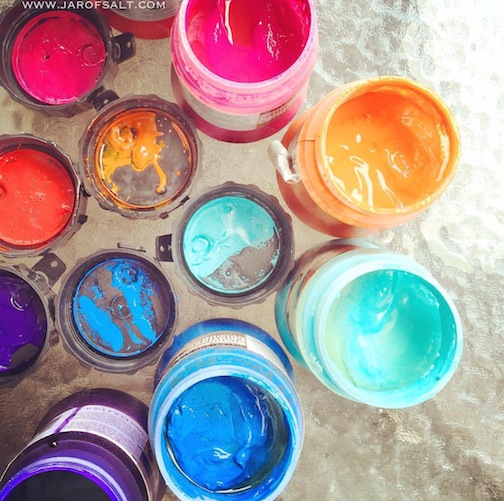
colorful jars of paint

So, now what? You want to do art but there are probably a million and one reasons to not make art. But should the lack of art degree hold you back?

I think not.

In the era of the internet, there are so many ways to invent and reinvent yourself.

How does one become an artist in this day and age, then?

1. Be and Make.

It’s hard to be an artist if you’re not making anything at all. This makes sense, doesn’t it? Don’t pressure yourself, though.  No one expects you to make the next Sotheby-worthy masterpiece tomorrow (but feel free to do so if you can!). Start with doodling on the margins of your books. Make circles on your notebook. Draw a flower. ANY flower. So really, the first step to calling yourself an artist is to be one.

And that starts with making.

2. Commune.

I’ve spoken of my creative block many times over but what was the first step to break the ice?

I joined WordPress in 2011 and started blogging.  When I first joined WP five years ago, I lamented about the lack of art in my life.  Then one post led to the next, one comment after another.  And it got the ball rolling.  I managed to produce my first sketch after five years.  And things started rolling ever since.

There are also so many creativity, sketching, drawing and art groups on Facebook. I suggest you type in those words and see what shows up and resonates with you and your preferred medium. Discussions can be amazing, so much to learn, and sometimes all you need is a regular art challenge to get the juices flowing.

With social media, you can also follow artists who inspire you.  Many of them are active in real time.  Comment or write them an email.  Many of them will happily respond, you’ll be surprised 🙂

3. Learn.

The very first art class I took was for pottery, in 2006. And one of the things I did to break the ice after my creative block later on was to take another live class as well. This time it was for  printmaking. Unfortunately, I didn’t feel motivated or challenged enough in class 🙁 So I hope to revisit this someday as I still have a lot of printing ink in my work room 😮

I also tried my hand (literally) in calligraphy .  It’s a skill I thought I can never learn (or even enjoy!) because of my messy penmanship. But with proper instruction and like-minded people, it can be done.  My calligraphy obsession was short-lived but it lead me to Instagram to share my work.

And my social media life has never been the same ever since 🙂

Also, thanks to the internet you can learn all sorts of creative things from the comforts of your own home.  Check out online art classes from Creative Bug, Skillshare and even Lynda if you’re doing digital.  Also, find other artists to follow because many of them give online instruction.

There are a lot of free classes out there so maximize them, especially on YouTube.  However, I highly recommend saving and spending on some of the paid classes because quality education is truly worth having, no matter how small.

4. Read. A lot.

I haven’t read fiction and novels in years but I constantly buy art and design books. And magazines! Even though some of them are more expensive than a book.  And that’s because fine quality art and design magazines are produced with the content direction of a book.  Frankly, I don’t like reading highly visual material through a screen because  I’m a tactile reader and I like making notes and marks as I use them for reference as I work. Look for inspiring publications like Flow, Uppercase, Frankie and Anorak.

I remember a successful artist who told me to invest in art books. The more, the better. I whined, “It’s so expensive!”.

His reply was simple, “Why, how much do you think  would you have spent if you went to art school?”

That moment changed my perspective forever.

5. Promote yourself.

Before  online everything and social media, I found  art circles to be very cliquish. I still do, to be honest.  When I started in 2002, everyone was at the mercy of print editors to get your name and work out there. It was so hard to reach out to editors and it usually helped to have someone refer you first.  Yes, I’ve done cold calls to media heads back in the day and they proved to be very fruitful.  It was only when my art started to circulate among publications that my career kicked off.  Eventually, editors and producers were the ones requesting  to work together.

Nowadays, it’s so different. If you post your work on Facebook or Pinterest, friends can easily share your work. Before you know it, one thing leads to another and then you blink: your art is already out there.  Know this however: promoting myself makes me feel icky. But it has to be done and you will find a voice that you will eventually be comfortable with without being in-your-face salespitchy. 🙂

Not all platforms work for everyone, though. Some find their voice in Twitter, others on Pinterest. Many on Facebook.   In my case, Instagram is the one that catapulted my work and helped instil a structure in the way I do things creatively.    If you’re trying to build a system to strengthen your social media presence, check out this course by Melissa Camillieri.    I highly recommend it, seriously.

Sit on this and think about what you want to do with your art, whether you want to be paid for your services or simply want to do it for your own pleasure. Heck, you don’t even have to share it if you don’t want to.

But whatever you do, start small.  Be it a nicely-written grocery list, drawing random stick people on the corner of the newspaper, adding color to a homemade cookie, a hand-written postcard for a friend, a practice stitch on a sample cloth, or even just splattering paint on a piece of  paper for no reason at all.

What matters most, I believe, is to just make.

How Do Schools Kill Creativity?

By Uncategorized No Comments


“Do schools kill creativity?”

When I first heard the profoundly entertaining words and witty perspective of Sir Ken Robinson, I almost cried. I post my creative process for people seeking their place in the sun, imperfections and all. Here is a man who said it all for me.

People’s unhappiness and confusion can be attributed to a general educational system that kills creativity, according to Sir Ken Robinson.

I remember how I used to get very mediocre grades in 4th grade, simply because I couldn’t remember the myriad of names in the muscular and skeletal system. I also recall how I was sent to the guidance counselor during my senior year because my teachers were concerned that I was not paying attention, that I was always, as they would say, “spaced out”.  I also needed to draw in my notebooks so I could understand what’s going on, and survived school by getting bonus points with my drawings in reports (Kids, back then we had no ClipArt gallery and no Google images!). The only reason I liked Math was when I got to draw shapes, angles and graphs using colored pens but I still almost failed anyway.

My math skills only improved when I started earning my own money after university, and my intelligence in science kicked off as soon as I started mixing artist’s solvents and when I started baking bread. I was also a late bloomer as a reader because I only liked Tintin comics, and colorful books with lots of pictures. I cheated through my book reports by spinning off stories from the summaries at the back (which my teachers saw through!).

Sir Ken Robinson raises an interesting point: that professors shouldn’t be the hallmark of success or intelligence because most of the time, they live in their heads. We have an educational system that works on everything waist up. Everything academic, everything cerebral is given much weight. He also mentioned that in 30 years, degrees will probably be useless and obsolete.

I actually believe him.

He mentions back in the day a diploma guaranteed him a job. Now, you need an MA because the BA isn’t good enough. The jobs that require the MA now need a PhD. He observes that you now have a bunch of people with sparkling degrees who stay at home andplay video games all day.

So now what?

As expected, I was never encouraged to be an artist or a writer because they said I will starve for the rest of my life. As a former educator in a mainstream school, I felt bad when students with mediocre grades in major subjects are regarded as a big joke by no less than the teachers themselves. I joined the educational system in hopes of finding students who are just like me and do better in their lives sooner than I did.                                                    

Although I became a working part-time artist at 27, I stopped a few years later when I hit a creative slump, riddled myself with debilitating self-doubt and one colossal creative block that spanned almost 5 years.   It was only in 2012 that I gratefully picked myself up, and rebooted my art career.  At almost 40, I have just begun working once again as a professional painter and artist.

And a full-time artist. Finally.

He also shares the extraordinary story of Gillian Lynne, the famous choreographer of “Cats” who was considered a below-par student who kept fidgeting and lacked focus. She was brought to a doctor by her mother to be examined for behavior. Her mother narrated Gillian’s “problems” to the doctor. Later on, the good doctor asked the mother to step outside with him so they could discuss privately. He turned the radio on and left the room. Then, he told Gillian’s mom to look inside the room to see Gillian dancing to the music playing all around the room. He advised her to send Gillian to a dancing school: “Your daughter is a dancer. Send her to a dance school.” And when she went to dance school, she saw everyone was just like her — kids who had to keep moving in order to learn.

Let the children dance, sing, cook, paint, sculpt, write and whatever it is that makes their hearts sing. People are not machines where data can simply be encoded, programmed, controlled and re-calibrated. We have feelings, we can taste, smell, hear, feel and see things.

If only we let the child’s imagination, senses and creativity flourish, change everywhere will be massive.

– – – – – – – – –


Busting The Day’s Creative Block With Semi-Circles

By Uncategorized No Comments

moleskine art

There are days when you just know what you’re going to do and make and there are days that are a bit of a struggle. Anyone feeling creatively stubborn today?

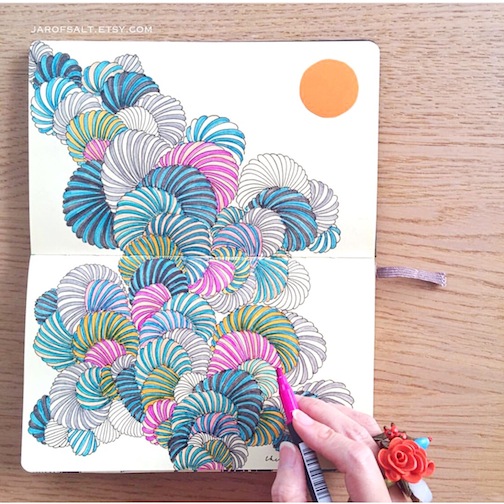
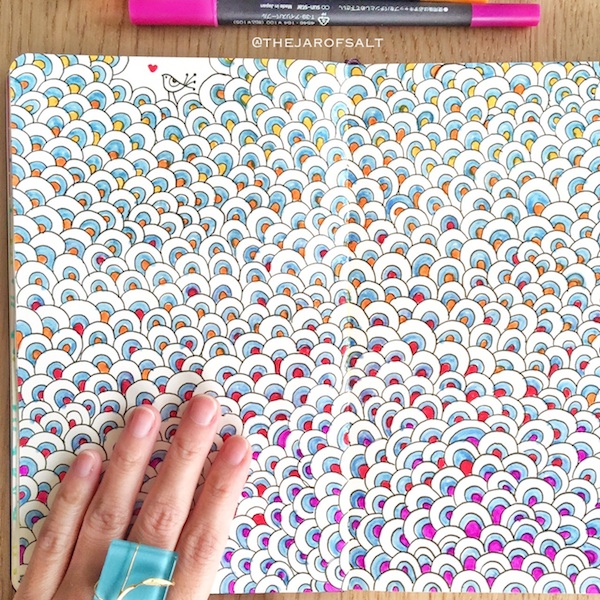
For this Moleskine spread, I chose one tiny element from my previous sketches, like the semi-circle, and just drew it over and over and over and over again. It’s a lot soothing and easier than it looks, I promise.

Are You On Instagram?

By Uncategorized No Comments

jar of salt


Been working on fixing up myself on my social media account lately. And after deleting HUNDREDS of photos, changing my handle (I don’t even know why I chose a different name on Instagram in the first place), and fixing my bio, I think I am set.

If you’re on Instagram, pop in and say “hi”! It would be nice to hear from you 🙂

Happy weekend everyone!

5 Reasons Why You Should Read “Creative Block” By Danielle Krysa

By Uncategorized No Comments

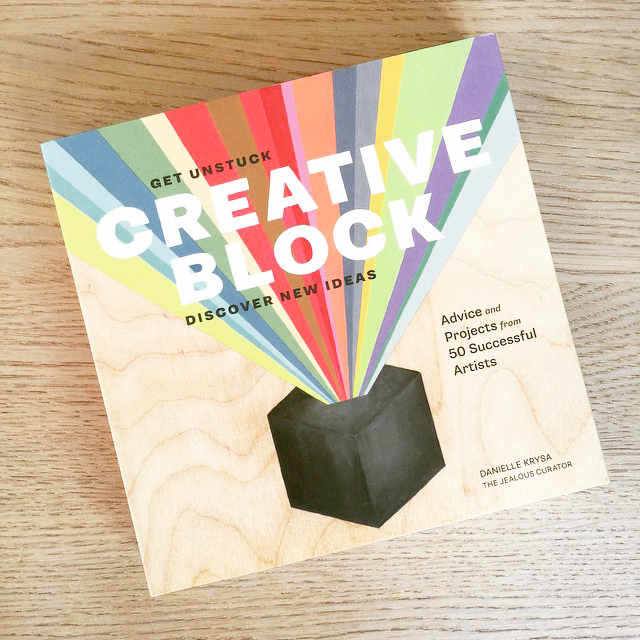
Creative Block book The Jealous Curator 1

It’s not everyday that I come across a book that is after my own heart — every single page, cover to cover.  Danielle Krysa (aka The Jealous Curator) is a story in itself, one that all 50 featured artists in the book speak of.  It’s been a long, long time since I’ve picked up a book so engaging that it’s the first thing I read while having breakfast (and the only thing I read throughout the day when I’m free!).

Here are 5 reasons why I BELIEVE every person who has tried creating (professional artists and artists-at-heart alike) should definitely have “Creative Block” in their collection:

Reason #1: Danielle Krysa

Find out why she’s called “The Jealous Curator” and you will understand why the book and the author are one and the same — and that ultimately, we are just like her, too 🙂 By the way, I’ve only met her through social media and I already think she’s an incredible human being.

Reason #2: Pictures. LOTS of pictures!

One of the best ways to be inspired (or jealous, whichever it is you choose) is to see other people’s breathtaking work.  The book is packed with images that draws the reader instantly into the world of every artist, designer, illustrator, painter and sculptor Danielle interviewed.

Reason #3: These artists are human.

With our bellowing voice of self-doubt crippling our fullest potential, this book opens our eyes to the world of prolific and creative professionals.  “Creative Block” is a collective story, humbling tales of otherwise ordinary people who talk about their work, the artists whom THEY are jealous of, dealing with negative (and scathing!) remarks and their creative process.

Reason #4: The book is easy on the eyes.

The size of the book makes it easy to appreciate full-color art spreads. Moreover, what I enjoyed most was that it was a quick read, where around 3 pages are dedicated per artist in a Q&A style of writing.

Reason #5: It is packed with practical advice and easy-peasy projects to do.

Every artist featured in this book provides a Creative UNblock activity, nothing too overwhelming actually.  I’ve tried a couple myself and they encourage you to think out of the box by looking at the mundane in a different way, and using whatever is already physically available in your life.

Here are two of the projects I’ve tried thus far:

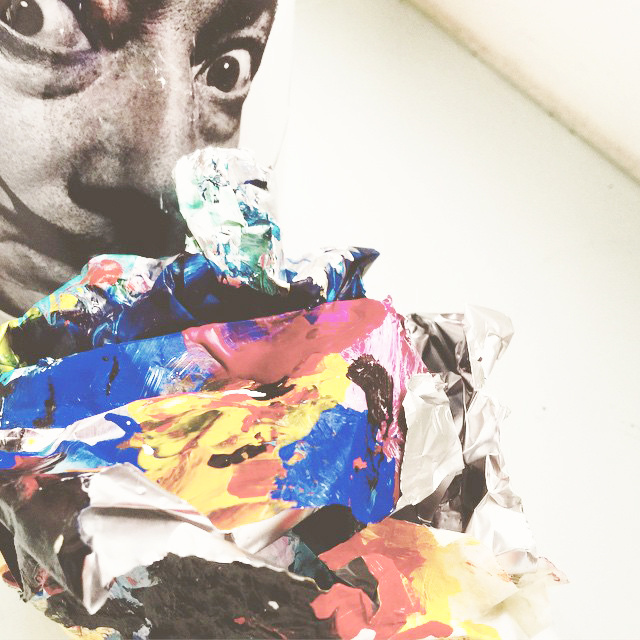
1.  Creative UNblock #26 from Jessie Draxler: gather ordinary things from around the house, place them together and take a photo.  I went through my paper bin and found this crumpled foil from my acrylic palette and placed it beside a Dalí coffee mug.

Danielle Krysa book Creative Block

2.  Creative UNblock #04 by Cassandra Smith: make a little sculpture out of a found object.  My take on this is drawing my dog Jones around some used corks I found on a shelf. Wa-chaaaa!

how to use an old wine cork

For those unfamiliar with my earlier posts, click my ABOUT page and find out why this book means a lot to me.  “Creative Block” has become a friend of sorts that I can turn to when in need of some delicious creative replenishment.

Have a succulent day and get those creative juices flowing now!

PS. No, this is not a paid post, in case you’re wondering. I just really, REALLY loved the book 🙂